SNAPPER (Chrysophrys auratus)

Snapper have a reputation problem.
For decades, they’ve been painted as slow, cautious fish — bottom dwellers that nose around for dead baits and the occasional soft plastic. Reliable, yes. Predictable, maybe. But that version of snapper only tells half the story.
The truth is far more interesting.
Snapper are intelligent, adaptable predators that shift their behaviour depending on light, depth, season, and opportunity. They can forage delicately one moment, then strike with absolute violence the next. They are not specialists — they are generalists with teeth, patience, and excellent judgement.
To understand snapper properly, you have to stop thinking about how we catch them — and start thinking about how they live.
FORM AND FUNCTION
Snapper are built for versatility.
Their broad, laterally compressed bodies allow tight turns around structure, while their powerful shoulders and tail provide explosive acceleration over short distances. This isn’t the body of a long-distance runner, it’s the body of an ambush predator that lives among reefs, sand edges, kelp beds, and broken ground.
Their jaw structure reflects this duality. Sharp canine teeth at the front are used to seize prey, while crushing molars further back are designed to deal with shellfish, crustaceans, and hard-bodied food. Few fish in New Zealand waters have a feeding toolkit this diverse.
This is why snapper can switch seamlessly between hunting baitfish mid-water and rooting through reef for crabs, and why they thrive in such a wide range of environments.
EYES, SENSES, AND DECISION-MAKING
Snapper see extremely well.
Their large eyes are adapted for the complex light conditions of reef environments, where sunlight refracts, shadows shift constantly, and contrast matters more than colour. Snapper are particularly good at detecting silhouette, movement irregularity, and flash — the exact cues produced by injured or isolated prey.
Beyond sight, their lateral line system allows them to sense pressure changes and vibration. This gives snapper a three-dimensional awareness of their surroundings, even in low visibility or deeper water.
What’s often underestimated is how selective snapper can be. Large fish, in particular, assess before they commit. They don’t need to chase everything, they wait for the moment when the energy equation makes sense.
That’s why snapper will sometimes ignore dozens of offerings… then crush one that looks right.

AGGRESSION — THE OTHER SIDE OF SNAPPER
Snapper are not passive feeders.
While they will happily scavenge, especially in high-pressure environments, snapper are also capable of highly aggressive predation, particularly when feeding on baitfish. This behaviour becomes more pronounced in larger fish and in low-light conditions.
Big snapper frequently rise off the bottom to intercept prey in mid-water. They’ll follow bait schools along reef edges, patrol sand channels, and ambush from below. When they strike, it’s not tentative — it’s decisive.
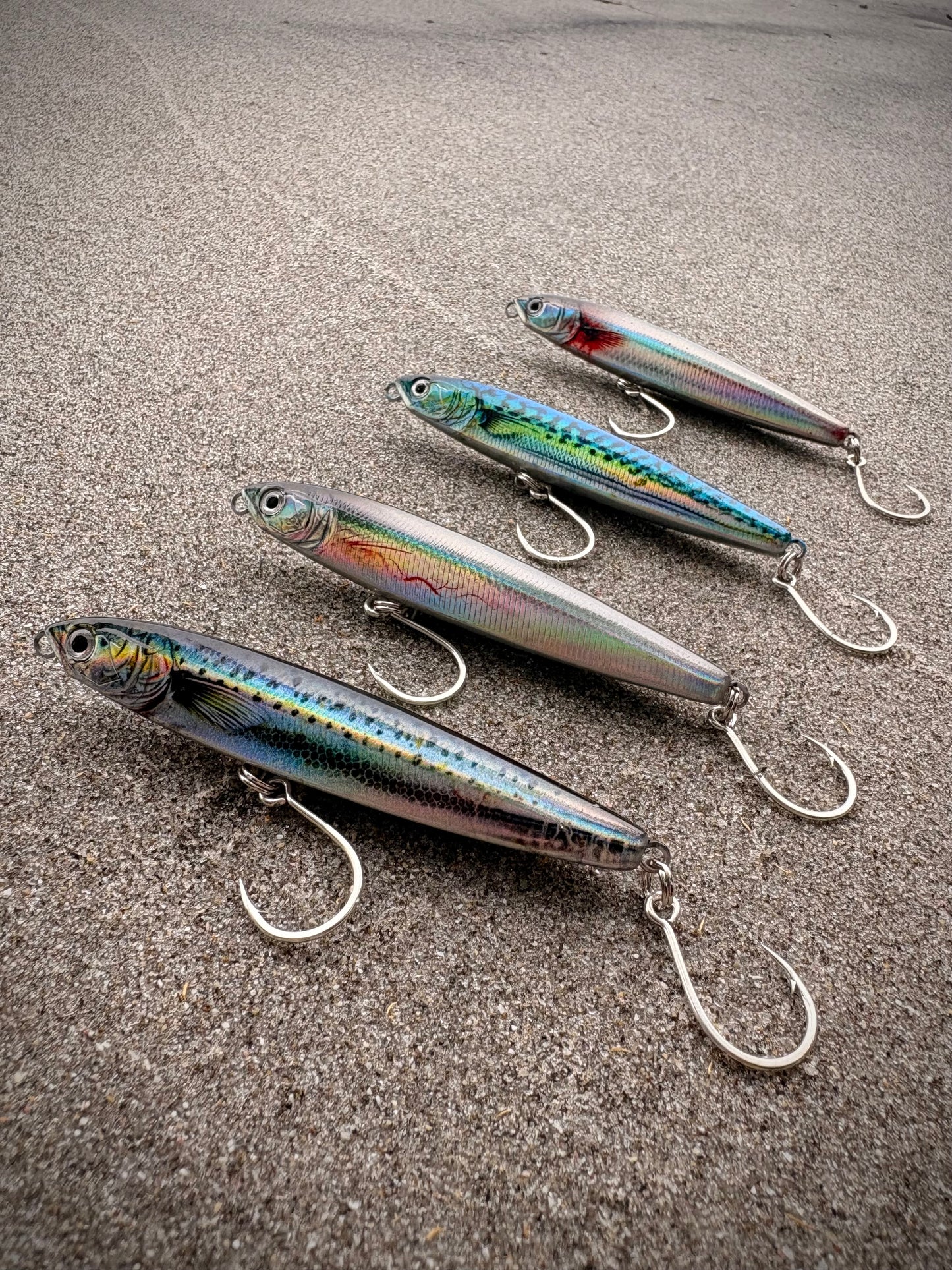
This lesser-known behaviour is why snapper are sometimes caught trolling hard-bodied lures, even well above the bottom. A realistic, slow-moving presentation passing through their patrol zone can trigger an instinctive response, not curiosity, but commitment.
It’s not their default mode, but it is very much part of who they are.
HABITAT — FROM HARBOURS TO THE CONTINENTAL SHELF
Few fish in New Zealand occupy as wide a depth range as snapper.
They are commonly found in knee-deep harbours, estuaries, and mangrove systems, particularly as juveniles, where shelter and food are abundant. At the other extreme, snapper are routinely caught in 80–100 metres of water, especially along offshore reefs and structure.
This adaptability is one of their greatest strengths.
Snapper move with seasons and conditions. In warmer months, they often push shallow to feed and spawn. As temperatures drop, larger fish tend to move deeper, congregating along reef systems and drop-offs where food remains reliable.
This vertical mobility is unusual among reef-associated fish and speaks to snapper’s ability to exploit almost any environment they inhabit.

DIET AND FEEDING STRATEGY
Snapper are opportunistic omnivores with a carnivorous bias.
Their diet includes crabs, kina, shellfish, squid, octopus, worms, and a wide range of baitfish species. They will feed alone, in small groups, or in loose aggregations depending on prey availability.
What’s important to understand is that snapper change feeding modes. They don’t hunt the same way all the time. Some days they graze. Some days they scavenge. And some days, especially when baitfish are present, they actively hunt.
This flexibility is why snapper are so successful and why they’ve endured intense fishing pressure better than many other species.
GROWTH, AGE, AND THE BREEDING DEBATE
Snapper grow slowly, and live a long time.
Large snapper are old fish, often decades old. These fish are highly valuable breeders, producing significantly more eggs than smaller individuals. This has fuelled ongoing debate around whether releasing big snapper is beneficial for the population.
What’s clear is this: large snapper are not easily replaced. They represent survival, experience, and genetic resilience.
Understanding the snapper lifecycle helps anglers make informed decisions, not just about what they catch, but what they return.

RELATIVES AND RANGE
Snapper belong to the Sparidae family, related to sea bream found across Australia, Japan, and the Mediterranean. New Zealand’s snapper are closely tied to Australian populations, though environmental conditions shape subtle behavioural differences.
Their range extends throughout coastal New Zealand and southern Australia, favouring temperate waters with structure, current, and food availability.
RESPECT THE TARGET
Snapper are not simple fish.
They are adaptable, intelligent, and deeply connected to their environment. They can be gentle foragers or aggressive hunters, shallow-water residents or deep-reef dwellers. They reward understanding and punish assumptions.
To know snapper is to appreciate contradiction — power and patience, caution and aggression, simplicity and complexity in the same fish.
And that’s what makes them worthy of respect.
Know your target.
Respect your target.
OOSH.
𝘿𝙤𝙬𝙣𝙡𝙤𝙖𝙙 𝙩𝙝𝙚 𝙬𝙖𝙡𝙡𝙥𝙖𝙥𝙚𝙧 𝙗𝙚𝙡𝙤𝙬 𝙖𝙣𝙙 𝙠𝙚𝙚𝙥 𝙩𝙝𝙞𝙨 𝙥𝙧𝙚𝙙𝙖𝙩𝙤𝙧 𝙘𝙡𝙤𝙨𝙚