WINTER PREDATORS - Why the Bite Never Truly Stops.

Kingfish in NZ. Tuna in Australia. Why the Bite Never Truly Stops.
Most anglers pack it in when winter arrives.
The boat stays parked a little longer. The alarms go off later. The ocean feels quieter, colder… emptier. Social media slows down. The explosive surface feeds of summer disappear and suddenly it feels like the season is over.
But beneath the surface, predators are still hunting.
Kingfish still stalk reef edges in New Zealand. Southern Bluefin Tuna continue smashing bait schools across southern Australia. Samson fish patrol pressure points off Western Australia. Yellowtail Kings still haunt deep structure and current lines along the NSW coast.
Because winter doesn’t switch predators off.
It simply changes the rules.
The anglers who understand that often discover something special about cold-water fishing. Fewer boats. Less pressure. Cleaner water. Tighter bait schools. More predictable feeding windows. Fish that behave less erratically and more deliberately.
Winter rewards observation.
And for anglers willing to slow down and think like a predator, it can produce some of the most satisfying fishing of the entire year.

BUILT FOR EFFICIENCY
What Cold Water Does To Predators
Fish are cold-blooded animals. Their body temperature and metabolic rate are directly linked to the surrounding water temperature.
As water cools through May, June, July and August, predatory fish don’t suddenly stop feeding — but their energy management changes significantly.
In warm water, kingfish can afford to burn enormous amounts of energy. Their metabolism is elevated. They recover faster. They feed aggressively and often chase down fast-moving prey with reckless violence.
Winter changes that equation.
Colder water slows digestion, reduces metabolic demand and forces predators to become more energy efficient. Every burst of speed suddenly matters more. Every missed attack costs more energy. Every meal becomes more valuable.
This is one of the reasons winter fish can appear “fussy” compared to summer fish.
They are not necessarily less aggressive.
They are simply more selective.
A predator in cold water wants the highest possible reward for the lowest possible energy expenditure.
That changes everything about how they hunt.
Instead of charging randomly through scattered bait schools, predators often focus on:
- isolated baitfish
- injured prey
- tightly grouped bait concentrations
- ambush structure
- predictable current lines
- temperature-stable zones
In many ways, winter predators become more calculated.
And that creates an enormous advantage for anglers presenting believable baitfish profiles.
THE BAIT CHANGES FIRST
Follow The Food, Find The Predators
One of the biggest mistakes anglers make during winter is continuing to fish summer locations exactly the same way.
Predators move because bait moves.
And bait moves because survival changes with water temperature, current flow, oxygen levels and available food sources.
As water temperatures cool, many bait species begin schooling more tightly. Large scattered surface chaos often disappears and is replaced by more compact, concentrated bait balls.
This behaviour is survival-driven.
In colder water, tightly packed schools:
- reduce individual predation risk
- conserve energy
- improve navigation efficiency
- create confusion against predators
Predators know this.
Kingfish and tuna often spend winter shadowing these concentrated bait schools with incredible patience.
This is why winter fishing can sometimes feel “dead” for hours… until everything suddenly happens at once.
The fish are often there.
They’re simply not wasting energy feeding recklessly all day long.
Instead, they wait for opportunities:
- tide changes
- low-light windows
- current increases
- bait separation
- pressure changes
- brief temperature fluctuations
Understanding this changes how you search.
Instead of chasing random bird workups, winter fishing becomes far more about reading structure, current and bait positioning.

NZ WINTER KINGFISH
Cold Water Kings
New Zealand kingfish never truly disappear.
Even during the coldest months, fish remain catchable throughout much of the country — particularly around northern and central regions where water temperatures remain relatively stable compared to deep southern systems.
What changes most during winter is behaviour.
Summer kingfish often roam aggressively. Winter kingfish tend to hold tighter to:
- reef systems
- current pressure points
- harbour entrances
- pinnacles
- bait-rich structure
- deeper foul
They become more deliberate.
Many anglers actually underestimate how shallow winter kingfish can still be, particularly during stable weather periods with good tidal movement and concentrated bait presence.
In clear winter water, visibility increases dramatically. Baitfish become easier for predators to inspect.
That’s where realism starts becoming critically important.
In dirty summer water full of chaos and competition, predators often react instinctively.
In clean winter water, fish frequently get a much better look.
Subtle details suddenly matter:
- natural bait profiles
- realistic colour transitions
- believable flash
- stable tracking
- controlled movement
- vulnerable pauses
A lure that looks “close enough” in summer may suddenly feel artificial in winter.
This is especially noticeable during slower bite windows where kingfish track lures for extended periods before committing.
Often the bite doesn’t come from aggression alone.
It comes from belief.

AUSTRALIA’S WINTER PELAGICS
Southern Bluefin Tuna & Yellowtail Kings
While New Zealand anglers focus heavily on winter kingfish, Australia’s colder months produce some of the most exciting pelagic opportunities of the year.
Particularly in southern Australia.
As water cools, massive schools of Southern Bluefin Tuna begin pushing through South Australia, Victoria and Tasmania following concentrations of baitfish including:
- slimy mackerel
- pilchards
- sardines
- saury
Unlike many species that slow significantly in cooler water, Southern Bluefin Tuna are highly specialised cold-water hunters. Through a remarkable physiological adaptation known as regional endothermy, they are able to retain heat in key muscle groups and maintain extraordinary swimming efficiency even in cold southern water temperatures.
They are built for constant movement.
Built to hunt.
Much like kingfish, winter tuna often become heavily focused on dense bait schools and isolated vulnerable prey.
This is why natural baitfish profiles consistently outperform unrealistic presentations during many tuna bites.
When predators are feeding specifically on slimy mackerel… they want slimy mackerel.
Not a random bright object.
Not exaggerated colours.
Not fantasy patterns.
Real predators spend their entire lives studying baitfish.
The closer something looks to the real thing, the easier it becomes for a predator to commit.
Meanwhile along the NSW coastline, Yellowtail Kingfish continue haunting:
- deep reefs
- bait schools
- harbour systems
- pressure edges
- offshore structure
Again, the common denominator remains bait.
Find concentrated bait in stable winter water and predators are rarely far away.
LESS BOATS. LESS PRESSURE. BETTER OPPORTUNITIES.
One of winter’s biggest advantages has nothing to do with water temperature.
It’s fishing pressure.
Summer fisheries receive enormous pressure. Popular reefs, headlands and bait grounds can see constant boat traffic, noise, prop wash and lure presentations day after day.
Winter changes that.
Suddenly:
- ramps are quieter
- reefs get rested
- fish encounter fewer lures
- bait behaves more naturally
- predators become less pressured
This can create incredibly high-quality bite windows for anglers willing to put up with colder mornings and less comfortable conditions.
Many experienced anglers quietly consider winter some of the best fishing of the year.
Not because the fishing is always easier…
But because the behaviour often becomes more predictable.
Winter rewards patience.
It rewards observation.
It rewards anglers who pay attention to current, tide, bait movement and presentation detail.

READY FOR THE WINDOW
One of the biggest differences with winter fishing is that opportunities are often shorter, sharper and less predictable than they are during summer.
Long lazy surface feeds become less common. Instead, predators may only reveal themselves briefly:
a fast bust-up beside a bait school
a single kingfish pushing bait against structure
birds suddenly dipping for thirty seconds before everything disappears again
Winter rewards anglers who stay ready.
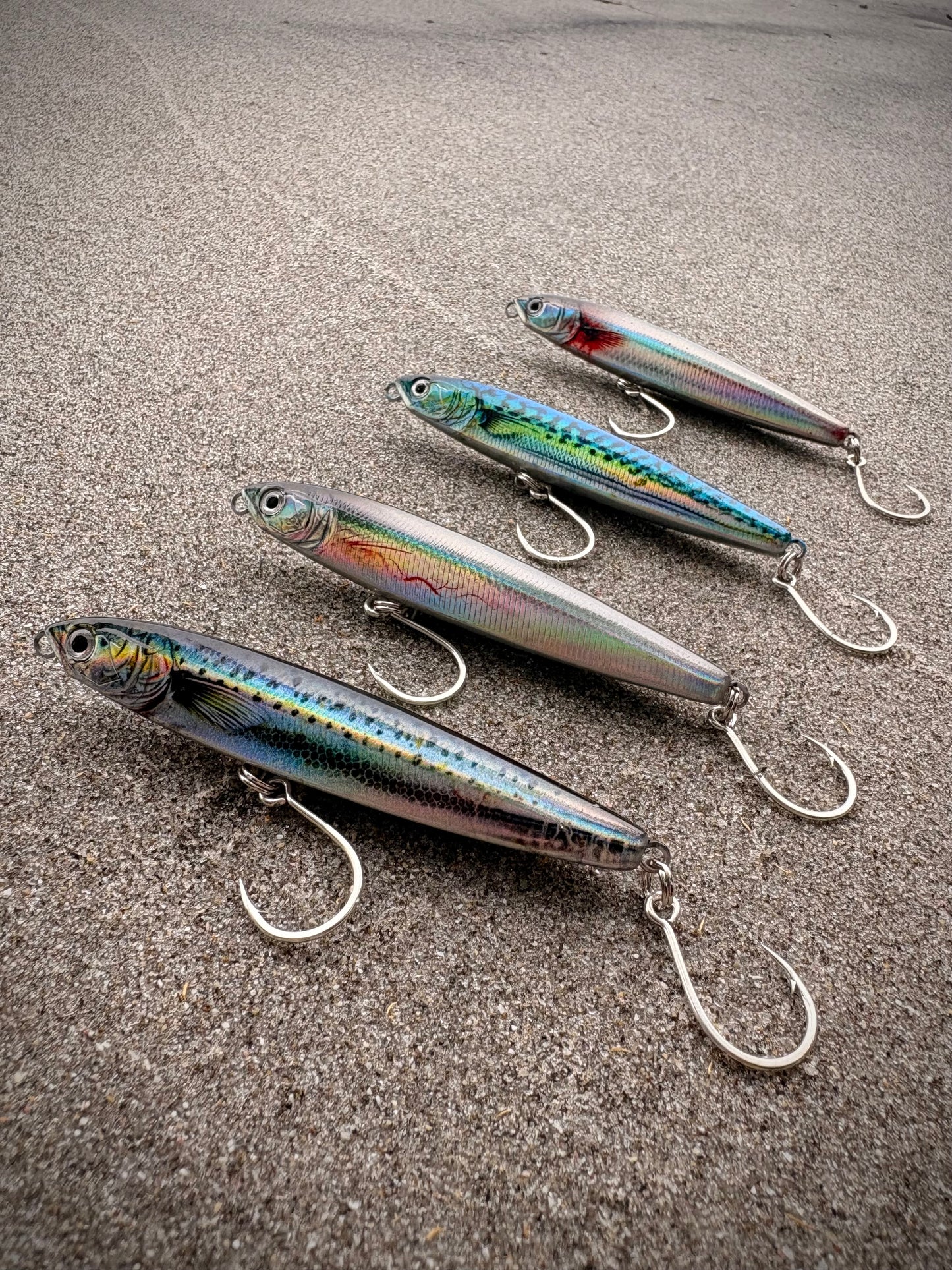
Many experienced anglers keep a stickbait rigged and within immediate reach at all times during winter sessions because when the opportunity appears, hesitation often means missing it completely.
The window may only last seconds.
And in cold water, predators are far less likely to waste energy returning repeatedly to the surface once the opportunity passes.
A believable presentation in the first few casts often matters far more than firing fifty casts after the moment has already gone.
WINTER TACTICS
Slowing Down & Thinking Like A Predator
Winter fishing often favours anglers willing to fish with intent rather than speed.
Some of the most consistent winter adjustments include:
- working structure more thoroughly
- extending pauses
- slowing retrieve speed slightly
- focusing heavily on bait presence
- fishing tide changes harder
- targeting warmer parts of the day
- prioritising stable weather windows
- paying attention to current seams and pressure edges
But perhaps most importantly…
Winter rewards realism.
In calmer, clearer water with tighter bait concentrations, predators frequently inspect presentations more carefully than they do during chaotic summer feeds.
That doesn’t mean lures need to be flashy.
If anything, the opposite is often true.
Natural movement.
Natural flash.
Natural profile.
Natural behaviour.
Because predators aren’t hunting “lures.”
They’re hunting something vulnerable enough to eat.

THEY STILL HAVE TO EAT
Winter changes the ocean.
It changes the bait.
It changes predator behaviour.
It changes feeding windows.
It changes how fish use structure and current.
But it doesn’t stop the hunt.
Kingfish still patrol reef edges beneath cold New Zealand swells. Southern Bluefin Tuna still tear through bait schools in southern Australia. Yellowtail Kings still stalk current lines and pressure points searching for weakness.
Because predators don’t stop feeding when winter arrives.
They simply become more efficient.
For anglers willing to slow down, observe more carefully and present something believable…
Winter can be one of the most rewarding seasons of all.
OOSH
LIFELIKE + LETHAL