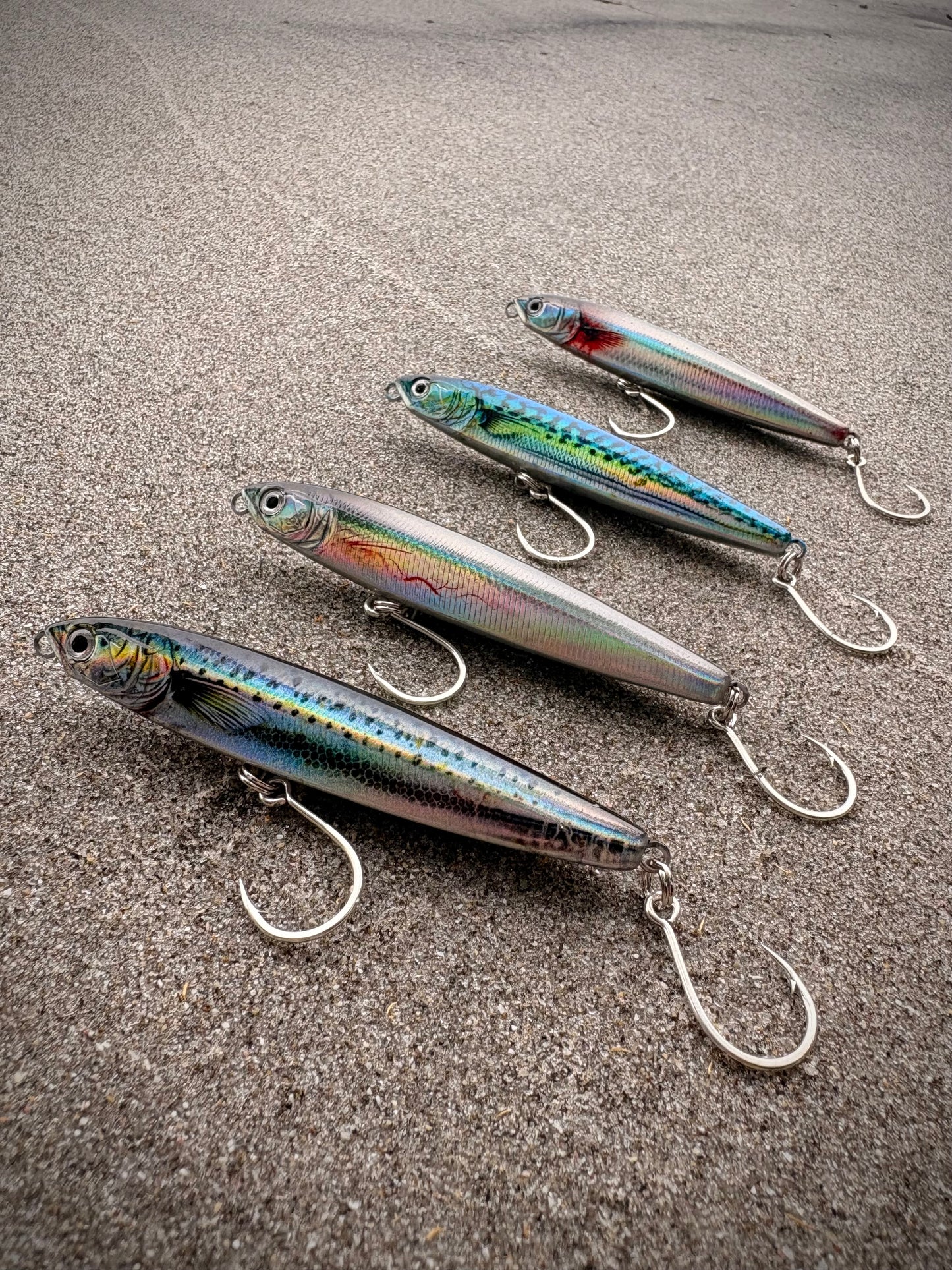
NEW TO STICK BAITING? Start Here
There are plenty of ways to catch fish in New Zealand, but not many that hit quite like stickbaiting.
It’s visual. It’s violent. And when it comes together, it’s about as good as it gets — watching a fish appear behind your lure and commit on the surface is something that sticks with you.
This isn’t a technical manual. It’s a straight-up starting point from the collective — the kind of stuff you’d hear leaning on the tailgate after a session. Enough to get you going, without overcomplicating it.

Two Ways to Do It
At its core, stickbaiting in New Zealand usually falls into two camps — landbased or boat. Both will catch fish, but they are very different experiences.
Fishing off the rocks is the grind.
You might spend an entire day casting, working ledges, current lines and wash zones. Cast after cast, staying focused, trying to make something happen. It’s hard on your shoulders, hard on your gear, and your lures will take a beating — smashed into the water, clipped on rocks, dragged through reef.
But when it happens off the bricks, it tends to happen properly.
Fishing landbased means you’re often running heavier leader, stronger hardware, and a much more aggressive drag setting. Once a good kingfish turns its head towards the reef, you don’t get many second chances. It’s a short, brutal fight, and everything in your setup needs to hold.
Boat fishing feels more like hunting.
You’re not just casting and hoping — you’re looking. Watching for bust-ups, bait schools, structure, current lines. You might pull up on a likely area and work it methodically, or you might spot fish on the surface and fire a cast straight into the action.
It’s more tactical, but it comes with its own challenges. Even a small chop can make it hard to keep your lure swimming properly. Staying in contact with your lure in wind and swell takes a bit of practice, and when fish are locked onto a specific bait, matching that becomes important.
If you’re not sure what the fish are feeding on, a simple trick is to drop a sabiki jig and catch one. Once you know what’s in the water, you can match your lure to it.
Another method a lot of anglers use is trolling a diving lure to hook a fish, then casting a stickbait into the area while that fish is still fighting. It can trigger competition from other fish in the school — just be prepared, because things can get hectic quickly.
One thing worth mentioning on the boat — once you’ve got a stickbait setup sorted, keep it rigged and ready to go. Loaded, sitting there, ready to fire.
It’s amazing how often an opportunity pops up — a quick bust-up, a bit of sign on the sounder, birds working — and if you’ve got a rod ready, you’re in the game instantly. If you don’t, you miss it.

Rigging
There are plenty of ways to rig a stickbait setup, but keeping it simple and strong is what matters.
A solid, practical system is braid connected to leader with an FG knot, then leader tied to a good quality ball bearing swivel. From there, a split ring attached to the swivel, and then your lure threaded onto that using split ring pliers.
It’s a clean setup that lets you swap lures easily without cutting back your leader every time, and it keeps your key knots intact. When you’re fishing hard — especially off the rocks — that reliability matters.
Leader strength will vary depending on where you’re fishing, but something in the 100–150lb range is common, particularly when you’re dealing with reef and structure.
How to Work a Stickbait
Stickbaiting can look complicated from the outside, but it doesn’t need to be.
The basic rhythm is simple. Cast out, take up your slack, then give the rod a small bump followed by a short sweep, then pause. Repeat that pattern and stay in contact with your lure.
The bump helps the lure kick off in a different direction, the short sweep gives it movement, and the pause is often when the bite comes. A floating stickbait will often sit nose-up or hang slightly in the water — that moment of stillness can be enough to trigger a fish.
You don’t need to retrieve the lure quickly. In a lot of situations, slowing things down and letting the lure behave naturally is more effective.
If you’re fishing off the rocks, it can pay to increase your speed slightly as the lure gets closer to shore. A faster retrieve at the end can imitate a baitfish trying to escape, and if a fish is following, that change can be what makes it commit.
Gear
There’s no shortage of high-end gear built specifically for stickbaiting. Shimano Stella and Daiwa Saltiga reels are about as good as it gets — smooth, powerful, and designed for this exact style of fishing. If you want to invest in top-tier gear, you won’t regret it.
But it’s not a requirement.
A solid, reliable setup will do the job just fine. For landbased fishing in particular, a lot of anglers prefer not to take their most expensive gear onto the rocks. It’s a tough environment, and things get knocked around.
A rod like the Tica Hoodlum paired with something like a Tica Tempest reel is a good example of a practical, capable setup. Strong drag is important, and most anglers will run braid somewhere in the 50–80lb range depending on the outfit.
When it comes to rods, graphite or high-carbon blanks are preferred over fibreglass, which tends to be too soft for this style of fishing. A slightly softer tip can actually help with casting and reduce fatigue over a long day, while longer grips give you better leverage when casting and fighting fish.

The Small Stuff
A lot of the difference in stickbaiting comes down to the small things.
Good footwear on the rocks is critical. Proper rock shoes give you grip, which not only keeps you safer but also reduces fatigue over a long session. You’re not constantly adjusting your balance, and that makes a big difference when you’re casting all day.
It’s also worth deciding early whether you plan to keep or release a fish, and identifying a safe landing spot before you hook one. Trying to figure that out mid-fight rarely ends well.
Polaroid sunglasses are another simple but valuable tool. They help you see structure, bait, and sometimes even fish following your lure, and they make the quiet periods more engaging.
Gloves can save your casting finger from getting chewed up by braid, especially during long sessions.
For transport, a simple velcro strap to secure your lure to your rod will stop it swinging around and damaging both the lure and your gear.
When storing rods at home, cut your swivel off at the leader and wind your leader onto the reel. This prevents sharp bends at the tip guide if the rod is left rigged, which can lead to kinks — and those kinks are often what cause wind knots later on.

Knots
Knots are one area where it pays not to cut corners.
An FG knot for joining braid to leader is widely used for a reason. It’s strong and low profile, but it does take a bit of practice to tie properly. It’s worth learning and getting right at home, rather than trying to rush it on the water.
From there, a locked blood knot to your swivel is a solid, reliable option.
When you’re putting serious pressure on fish, your knots are often the weakest point in the system — so it makes sense to give them the attention they deserve.
Lures
This is where things get interesting.
There are a lot of good stickbaits out there, and part of the enjoyment is building your own collection and figuring out what you like to fish. Different shapes, sizes and actions all have their place, and most anglers end up with a bit of everything.
If you’re just getting started, something around the 160mm mark is a good all-round option. It’s big enough to get noticed by decent fish, but still manageable to cast and work all day.
Matching the bait can be effective when fish are keyed in, but just as important is fishing something you have confidence in. Time on the water matters more than overthinking colour or brand.

Common Mistakes
Most people make the same mistakes when they start.
Working the lure too fast is a big one. Not pausing long enough is another. A lot of anglers give up too early, or spend too much time worrying about having the perfect setup instead of just fishing.
Stickbaiting can be quiet for long periods, but it only takes one moment for everything to change.
Staying Safe
Fishing off the rocks comes with real risks, and it’s something that needs to be taken seriously.
Always keep an eye on the water and never turn your back on the ocean. Conditions can change quickly, and even a small swell can catch you out if you’re not paying attention.
No fish is worth putting yourself in danger — even if it is a proper kingfish.
Take the time to understand your surroundings, fish within your limits, and make good decisions. You’ll enjoy it more, and you’ll get to do it again.

Final Thoughts
The biggest thing with stickbaiting is just getting started.
You don’t need perfect gear. You don’t need perfect conditions. You just need to get out there and make some casts.
You’ll learn quickly, and every session builds on the last.
And when it finally happens — when a fish appears behind your lure and commits on the surface — it all makes sense.
If you want to go deeper into the species themselves and how they behave, you can check out the “Know Your Target” series on the OOSH website:
https://ooshfishing.com/pages/oosh-know-your-target
That’s where things really start to connect.
stay LIFELIKE + LETHAL
OOSH